
Craftsmanship Programming
Character development is at the heart of the craftsmanship program. Craftsmanship instills virtues such as patience, attention to detail, and perseverance. Lessons in resilience, responsibility, and the gratification of hard-earned achievement align with Sparhawk’s mission to cultivate young men of high moral character. The benefits of Craftsmanship are many:
- Growth in virtue, especially discipline, patience, and perseverance
- Growth in confidence through problem-solving and a clearer understanding of personal strengths and limits
- Learning the importance of attention to detail and applying the same diligence to classroom work
- Developing a sense of being needed and the joy that comes from meaningful contributions to the school grounds and community
- Being grounded in reality and appreciating and contemplating the material world, which we are called to shape and care for
- Learning practical skills that prepare boys for professional and family life
As students progress through the program, greater emphasis is placed on skills necessary for the care and maintenance of a home. These modules are aligned with more traditional vocational pathways, increasing awareness of different areas of the professional world and teaching students practical skills they will bring into adulthood.
Craftsmanship & the Liberal Arts
To learn more about how Craftsmanship programming complements a liberal arts curriculum and contributes to character formation, listen to this episode of HeightsCast, a podcast produced by The Heights School, featuring Sparhawk teachers John Paul Lechner and Joseph Haggarty.
Lower & Middle School
High School
Lower & Middle School Craftsmanship
Agriculture
The agriculture modules focus primarily on horticultural science. Each Sparhawk student is assigned a 4×4 plot within a raised garden bed and given the opportunity to select from a variety of seeds for planting. Over the course of the academic year, students are responsible for cultivating and maintaining their individual plots, harvesting their crops at the appropriate time.
Through this hands-on experience, students study soil composition, seed germination, and plant growth. They learn proper techniques for soil preparation and planting, as well as the varying growth timelines and life cycles of different crops. Students are also taught an essential lesson in responsibility and humility: while outcomes cannot be fully controlled, diligent effort and attentive care significantly increase the likelihood of success.
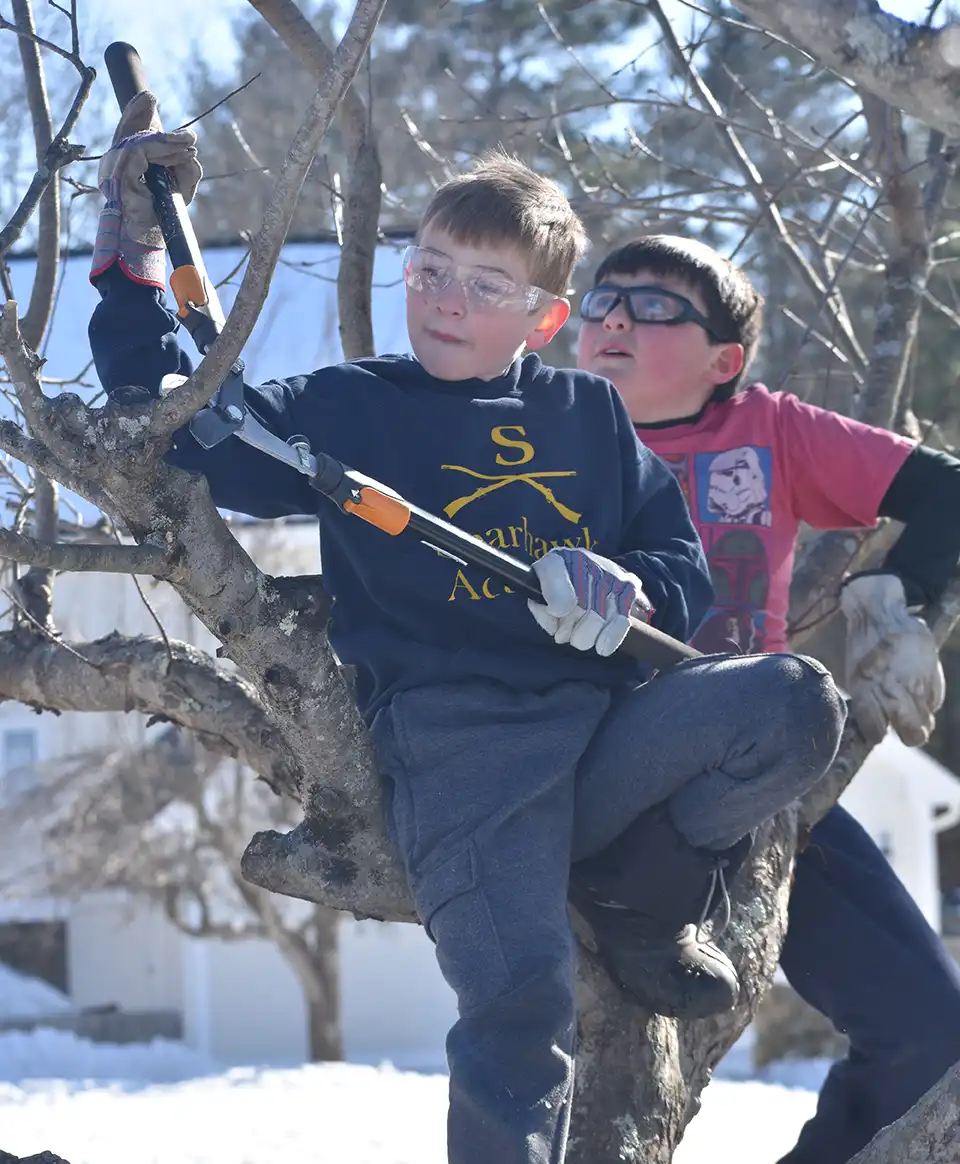
Landscaping is also an integral component of the agriculture module. Students receive instruction in the principles of landscape design and stewardship, learning how to thoughtfully shape and maintain outdoor environments. They develop practical skills in pruning fruit trees, planting and caring for flowers and shrubs, and maintaining the landscaped areas throughout the property. This instruction reinforces habits of care, patience, and responsibility, while encouraging students to take pride in the lasting impact of their work on shared spaces.
Bushcraft
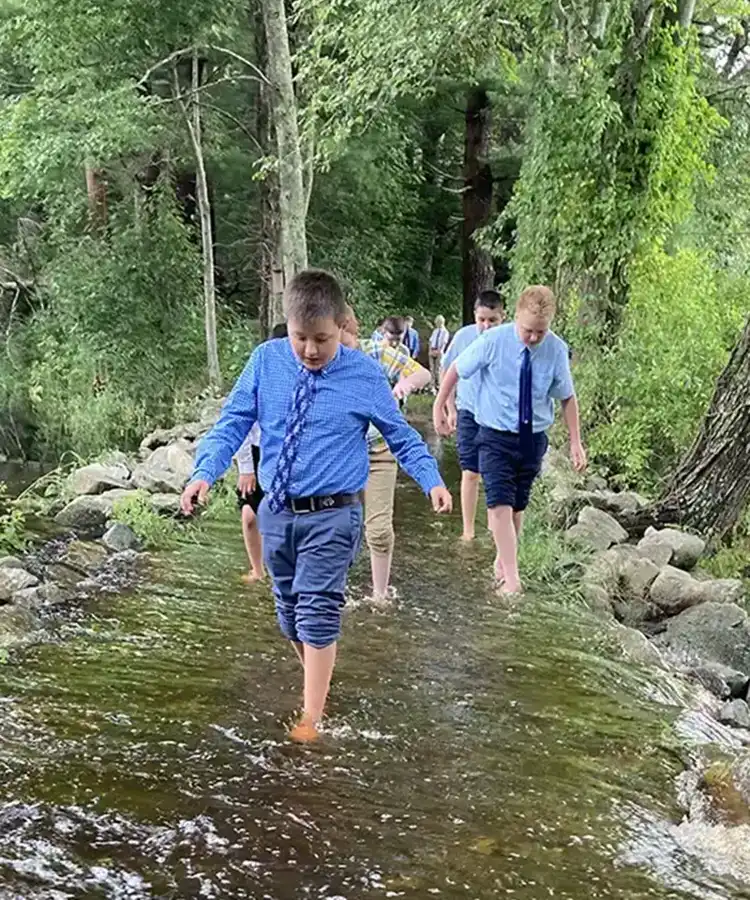
The bushcraft modules focus on the development of outdoor survival skills and orienteering. Students venture into the wooded areas of the school’s 58-acre property, where they are guided through practical instruction designed to foster competence, confidence, and respect for the outdoors.
Students learn essential fire-building techniques and safety practices, including how to successfully start and maintain fires in challenging or wet conditions. They are taught how to cook meals over an open fire, sharing the food they have prepared together while enjoying camaraderie and a sense of mutual accomplishment. Instruction also includes the construction of basic woodland shelters, emphasizing planning, teamwork, and effective use of available materials.
In addition, students develop orienteering and practical skills such as compass navigation, multiple knot-tying techniques, whittling, and rope-making. These skills are applied in larger collaborative projects, including the construction of rope bridges.
The bushcraft modules cultivate fortitude, resilience, and perseverance in the face of changing weather and unforeseen challenges. Students learn to respond constructively when plans do not go as expected, developing adaptability and self-reliance. Through these experiences, they are encouraged to approach life’s challenges with confidence, a spirit of adventure, and a cheerful determination grounded in preparation and effort.
Carpentry
During the carpentry modules, students are instructed in proper tool use and workshop safety protocols, learning to approach their work with attentiveness, responsibility, and respect for both the materials and the shared working environment.
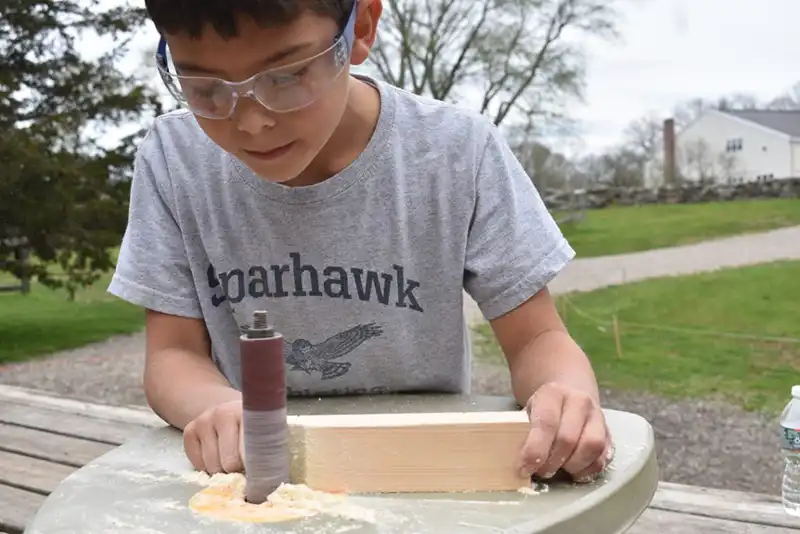
Students at the lower school level begin to understand the basics about wood, including the various species and their uses and properties. They work with tools such as tape measures, speed squares, hand saws, hammers and finish nails, wood-glue, a drill press, and sand-paper using a sanding block.
As students enter middle school, they begin to use power tools such as scroll saws, jig saws, and band saws under the supervision of faculty. Students progress from simple finish nail connections to installing concealed fasteners using countersink and plug-cutting bits.
Carpentry instruction progresses through a series of projects that increase in complexity and precision. Students begin with foundational builds such as birdhouses and napkin holders, and advance to more demanding projects including Christmas Nativity stables and Adirondack tables and chairs. In addition to individual projects, students also serve the needs of the school community, building items such as picnic tables and trashcan enclosures.
Throughout the program, students are taught the importance of following instructions carefully, measuring accurately, and attending to detail. Emphasis is placed on producing well-finished pieces that reflect pride in workmanship. As students refine their skills, they experience a tangible reward in the form of completed projects they can admire and use. Through this process, they come to understand that patience, care, and disciplined effort are essential to producing work of lasting quality and value.
Arts, Crafts, & Practical Skills
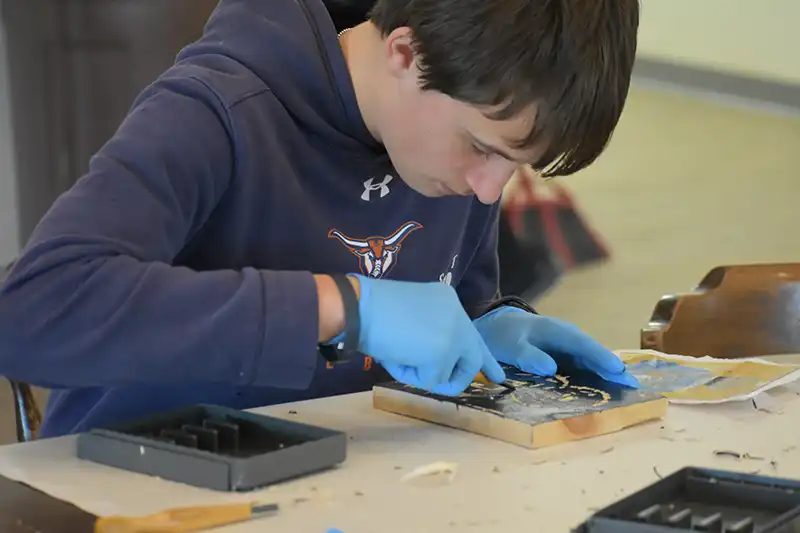
The Craftsmanship program also dedicates time to arts, crafts, and practical skills. Within these modules, students are introduced to a wide range of creative and practical activities, including woodburning, painting, plaster mold casting, sewing a button, and working with materials such as leather and other textiles. Culinary projects include making applesauce, making omelets and pancakes on eclectic griddles, making apple pies and pretzels in a dutch oven over open flame, and making pizza using our wood-fired pizza oven. These experiences help students develop self-reliance and an appreciation for the value of practical skills in daily life.
The program is further enriched by the involvement of guest instructors who are experts in their respective fields. These guests share their knowledge and experience through instruction and hands-on demonstrations, providing students with exposure to skilled artisans and professionals who model excellence, craftsmanship, and dedication to their work.
High School Craftsmanship
Carpentry: Rough & Finish
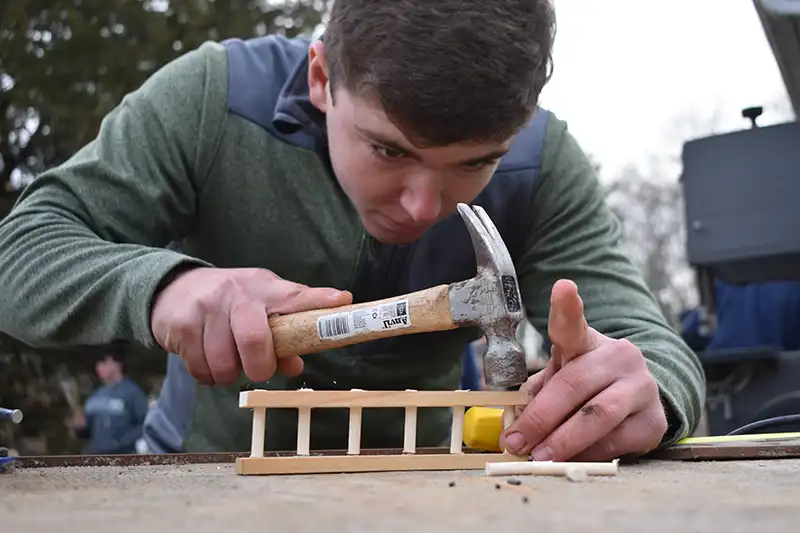
The Carpentry module introduces students to both structural and finish work, including framing, furniture making, and CNC-based projects. Students learn how careful measurement, planning, and execution turn raw materials into useful and lasting structures. This work fosters pride in workmanship and helps students see the value of building things that serve others. The skills gained include spatial reasoning and confidence that carries over into academic work and everyday life.
Basic Plumbing & Electrical
In this module, students learn foundational plumbing and electrical skills such as soldering joints, working with PVC, and installing light fixtures. Emphasis is placed on safety, careful sequencing, and understanding how systems function together. Students grow in responsibility and attentiveness as they work with real-world systems that demand accuracy. These skills promote practical self-reliance and a deeper appreciation for the unseen infrastructure that supports daily life.
Mechanics
The Mechanics module engages students in hands-on work with engines and machines, including go-kart engine repair and basic automobile maintenance. Students learn diagnostic thinking, perseverance, and methodical problem-solving as they disassemble, repair, and reassemble mechanical systems. The skills gained encourage independence and a practical understanding of how complex systems operate.
Metal Working
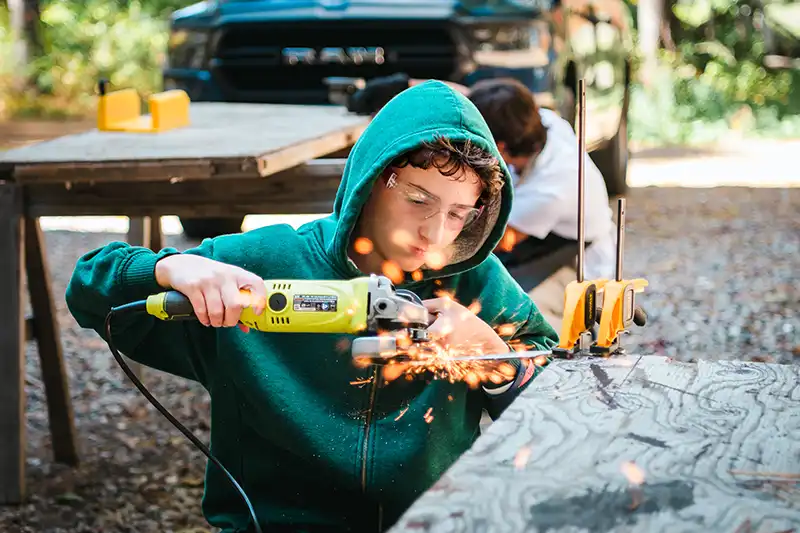
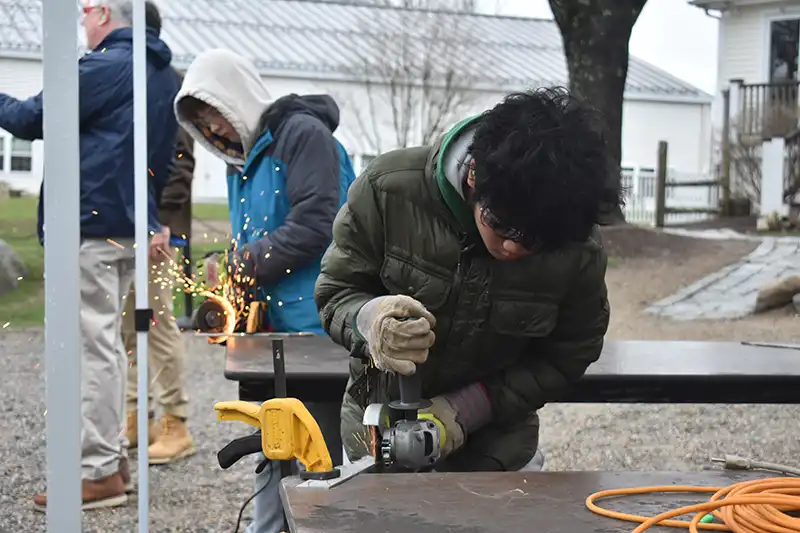
Metal Working introduces students to knife-making, basic welding, grinding, shaping, and tempering. The module requires focus, discipline, and respect for both tools and materials, as small mistakes have visible consequences. As students raw metal into functional objects, they learn respect for craft and gain an appreciation for careful, deliberate work.
Masonry
The Masonry module covers work with stone, cement, plaster, concrete, tile, and drywall, including building and repairing stone walls and pouring concrete slabs. Students learn to plan carefully, work steadily, and respect time-intensive processes such as curing and setting. This work cultivates patience while contributing to lasting improvements in the physical environment. The skills gained help students appreciate permanence, teamwork, and the satisfaction of building things meant to endure.